

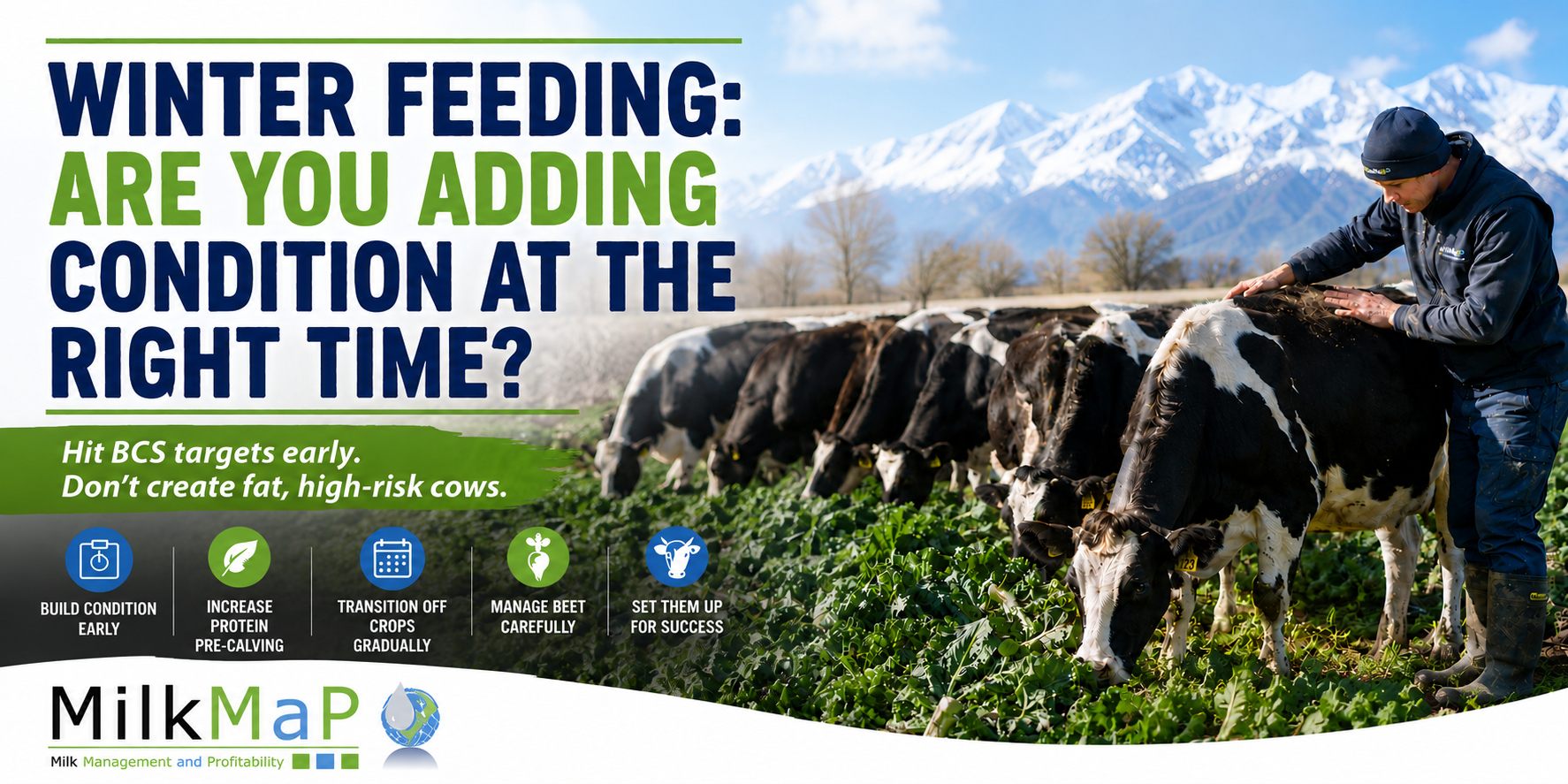
Winter Feed Management: Hitting BCS Targets Without Creating Fat, High Risk Heifers
Winter feeding is one of the most influential levers you have on calving outcomes, early‑season milk production, and whole‑herd performance. The biggest mistake many herds make is overfeeding too late and underfeeding too early, which leads to heifers and cows gaining condition at the wrong time. The result is predictable: large calves, fat animals, tighter pelvises, more calving difficulty, and a rough start to lactation.
The smarter approach is the opposite feed more early, then taper once Body Condition Score (BCS) targets are achieved.
Front‑load the feed: early winter is where the gains should happen.
From June through late June/early July, cows and heifers should be on a high plane of nutrition. This is the window where you want to build condition safely.
- Aim to hit BCS 5.0 for mixed age cows and 5.5 for heifers by late June/early July.
- Once targets are reached, reduce intake to maintenance levels.
- This avoids unnecessary high birth weight calves and fat deposition in late gestation, which is directly linked to calving difficulty and metabolic issues.
Increase protein in late winter to protect muscle and prime the udder.
As cows move into the final month before calving, their protein requirements rise sharply. Too many winter diets, especially beet heavy ones, are energy dense but protein light.
Low protein in late winter leads to:
- Muscle catabolism
- Poor colostrum quality
- Weaker immune function
- Reduced early‑lactation milk potential
A modest lift in the protein in July–August helps maintain muscle mass and supports mammary development.
- Aim to feed a beet heavy diet in June, then switch as much beet for as much kale, silage, or pasture as you have available for July.
Transitioning off winter crops: aim for 7–10 days prior to joining the Springers.
No matter the crop – kale, swedes, fodder beet, or a mixed system, the transition off crops is just as important as the transition onto them.
A correct transition off crops should take 7–10 days, gradually increasing pasture or silage while reducing crop allocation. This protects rumen function, reduces ketosis risk, and prepares cows rumen microbes for the more fibrous springer ration.
Ensure that you have stopped any lime or DCP supplementation at this stage and ensure that magnesium oxide has been fed. Ideally magnesium should be fed all winter, but the closer to calving the more critical. This is to ensure there is enough magnesium to produce the right hormones required for calcium cycling once the cow has calved.
Beet requires special attention: the rumen needs a month to change gear.
Fodder beet is extremely high in energy, but that energy comes from sugar, not fibre. Sugar based diets grow a completely different rumen microbe population than grass does. Grass relies on fibre digesting microbes and rebuilding that fibre‑fermenting population is slow.
A cow moved abruptly from a high beet diet to high grass will eat the grass, but she cannot properly use the energy. Her rumen is still set up to ferment sugar, not fibre.
The worst scenario is a cow calving on a full beet diet and then being shifted straight onto full grass. At calving her energy demand spikes, but the rumen cannot release enough energy from fibre. She must meet the deficit from her own back mobilising large amounts of fat.
That fat enters the bloodstream as NEFA. The liver cannot burn it fast enough, so it accumulates (fatty liver) and spills over into ketone production. Rising ketones (BoHB) lead to ketosis, with reduced appetite, milk drop, health issues, and the classic sweet breath.
When cows leave beet:
- The rumen must rebuild fibre‑digesting microbes
- This takes up to 30 days. So, aim for 10 days transition prior to the springers, then 14 days a springer.
- A sudden shift to a fibre‑heavy springer diet will cause ketosis will significantly impact the cow’s performance for the season ahead.
This is why a longer, more deliberate transition is essential for beet-fed cows. The goal is to slowly shift the rumen from sugar‑dominant to fibre‑dominant fermentation before calving pressure hits.
The payoff: easier calvings, stronger starts, better milk, better animal health.
When winter feeding is structured around physiology rather than habit, you get:
- Fewer calving difficulties
- Better metabolic stability
- Stronger early‑lactation appetite
- Higher peak milk
- Fewer animal health issues (RFMs especially)
- More consistent heifer performance
Winter is not just about “getting them through”, it’s about setting them up.