

Why BCS Matters
What is BCS, and why do we need to worry about it?
Body Condition Scoring (BCS) is a simple, hands-on method for assessing the amount of body fat a cow carries, regardless of breed or size. It reflects the balance between energy intake and energy output (mainly milk production, maintenance, and activity).
BCS changes slowly, making it a reliable indicator of long-term nutritional status and overall herd health.
Why getting BCS right matters
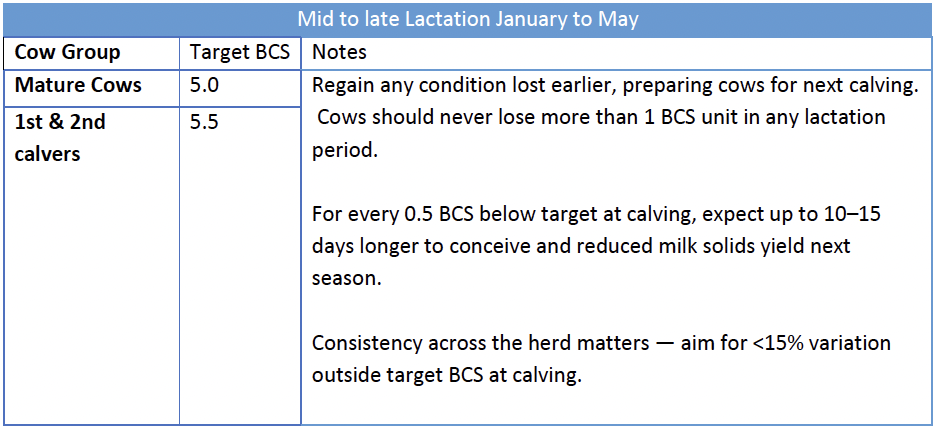
BCS is directly linked to production efficiency, reproductive performance, and animal health. Cows too light at calving have reduced fertility, lower milk yield persistence, and higher risk of metabolic disorders. Overfat cows are more prone to calving difficulties, ketosis, and reduced feed intake after calving. The second half of the season (January to May) determines how well your herd performs in the first half of the next season — getting it wrong can cost you production, conception, and profitability.
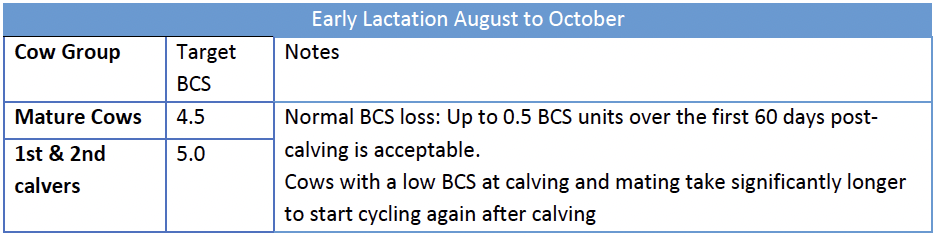
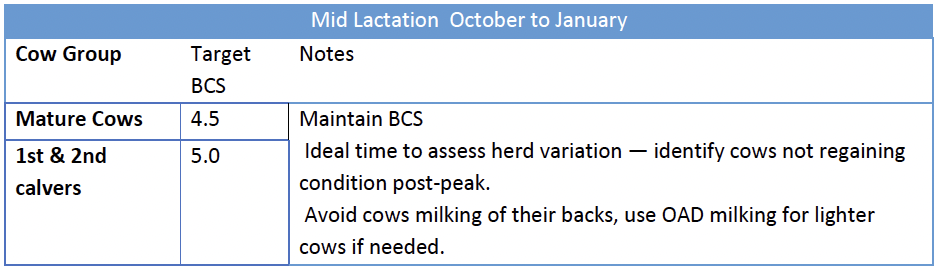
Targets at the different stages of the season

Setting up for success
Regular Scoring
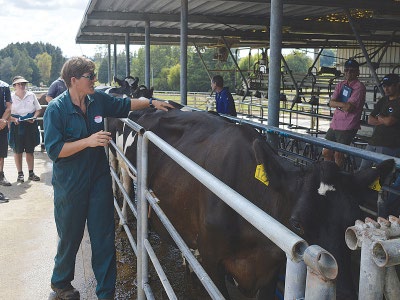
- In late lactation, monthly or bi-monthly BCS scoring helps track trends and trigger early management changes.
- Scoring should be done by a certified scorer, this ensures accuracy and consistency of scoring. For the most accurate score use a scorer that is not familiar with the herd, this prevents any biases occurring.
Key Checkpoints
- Mid-late summer / early autumn (Jan–Feb):
- Around mid summer to early autumn (January/February). Ideally after the early pregnancy scan so that culls can be identified so that interventions are target to early calving cows.
- This also allows for culling decisions to be made in periods of feed pinch, reducing the total feed pressure, giving in-calf low BCS cows an improved chance of gaining condition.
Mid-autumn:
Mid autumn (to determine which cows may need early dry‐off or extra feeding).
Recording the range (spread) of BCS across the herd, not just the average, is important — large variation means some cows are too thin, some too fat.
Record the range, not just the average.
- A widespread means some cows are too thin and others too fat — both carry risk.
Mid to late-Season Management Strategies
Assess pasture supply vs cow demand
- In the second half of the season, pasture covers and quality may drop—thus energy intake may fall while cows still produce. This can hinder BCS gain.
- Talk to your consultant about feed budgeting to ensure that late‐lactation cows still have sufficient energy available for condition gain (or at least no further loss).
- Monitor individual groups: older vs younger cows; high vs lower producers.
Milking‐frequency adjustments
- Shift early calving low BCS cows to once‐a‐day (OAD) milking, in early autumn to reduce energy output in milk, allowing more energy to go into body reserves. Targeting this early in the autumn gives cows the best chance to regain condition to set them up for winter while also setting them up to milk longer.
- If targeted early enough in autumn, these cows can be rotated back onto twice-a-day milking once cows have started to gain condition, meaning that the size of the OAD herd doesn’t have to grow exponentially.
Early dry-off high‐risk cows – May
- Cows with extremely high condition loss that calve early should be considered for early dry‐off so that they get more time to regain condition before calving.
- Dry‐off decision should use current BCS, expected calving date, and feed availability.
- Talk to your consultant about autumn feed plans
- Dry‐off decision should use current BCS, expected calving date, and feed availability.
Supplementary feeding and grouping
- Feed management is tricky as it could encourage more milk production at the detriment of condition gain, however feeds such as PKE are a good tool for gaining BCS.
- Using tools such as feed groups, where in-shed feeding is available, helps ensure milk production is not sacrificed while cows regain condition. Feed groups should be set up so that starch and protein levels in the diet drive production, while feeds such as PKE are used strategically to support body condition gain.
- Consider grouping thin cows separately, allowing better access, avoiding competition, and preferential feeding.
Practical checklist for the second half of the season
Monthly BCS scoring of 70+ cows per mob (random sample), record average, % below target, % above target. If a shift in these conditions is obvious, then an individual BCS is beneficial to identify those cows at risk of being light. Identifying these cows before they are light, i.e. <4.0, will give you the best chance of gaining condition pre-dry off.
- Identify:
- Which cows are losing condition fast
- Which cows haven’t regained any condition post-peak
- Which cows may benefit from OAD, early dry‐off, or extra feed?
- Update the feed budget: check if pasture covers and quality will support condition gain or at least maintenance.
- Draft cows by BCS and production level: for example, early calving light cows, high producing light cows→ priority feeding.
- Review milking strategy: consider which groups can shift to OAD or reduced milking frequency without hurting vat yield too much.
- Monitor outcomes: next season’s calving‐BCS, reproduction results, production drop/ yield carryover.
Key messages & takeaways for farmers
The second half of the season is not just about reaching this season’s production targets; it’s a strategic period to set the herd up for next season.
A small gain in average BCS may make a significant difference in reproduction, health and next season’s production. More feed doesn’t automatically mean quicker BCS gains during lactation—milk production competes for energy. Grouping, milking frequency and dry-off timing are as important as feed alone.
Maintain focus on BCS spread (variability) not just the mean BCS, aim for tight spread around target. That gives more consistent herd performance.